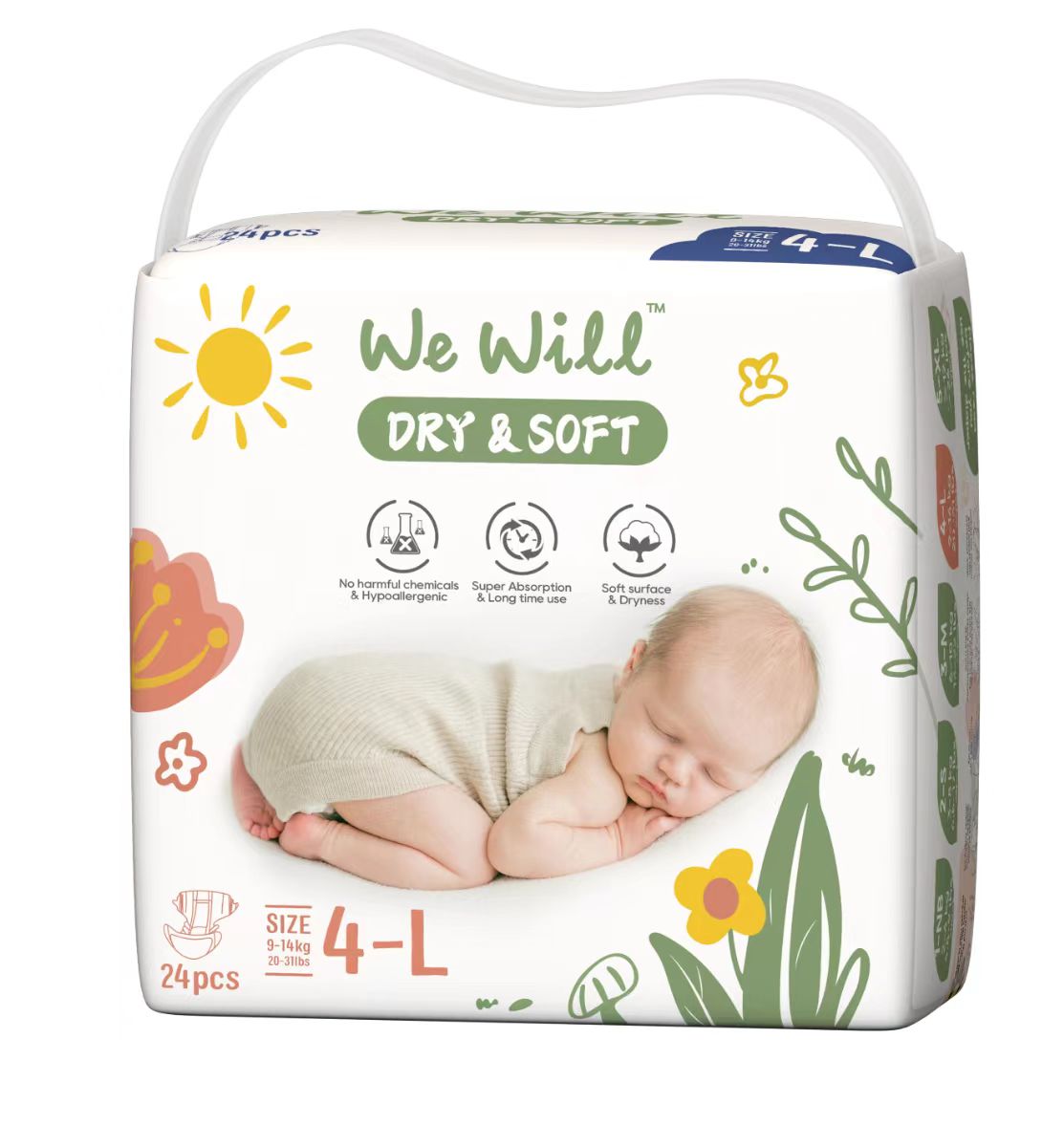
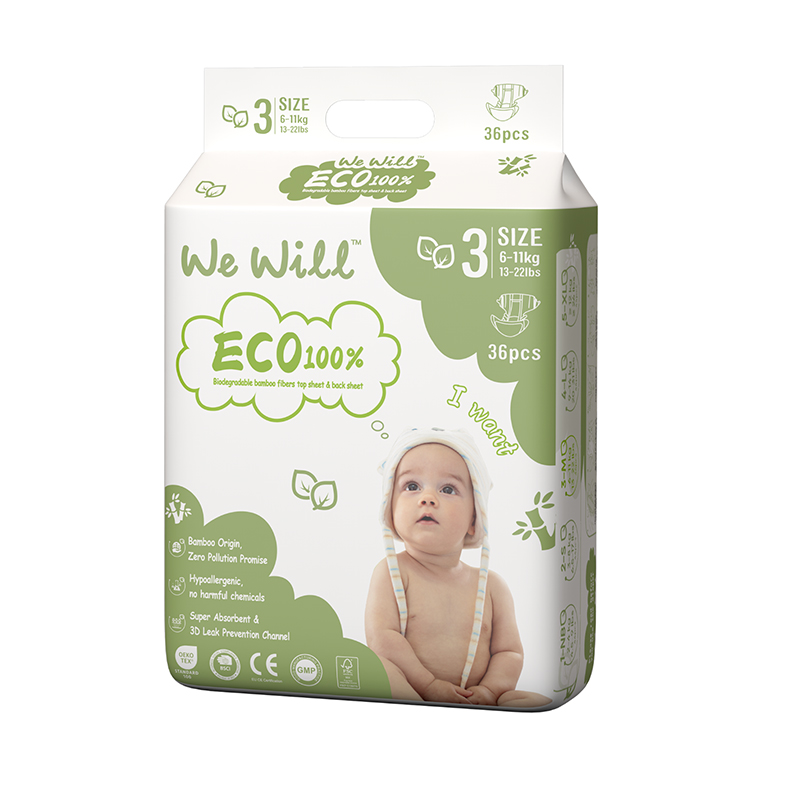
Many parents face a frustrating dilemma: red indentations often appear on their baby’s waist and thigh skin after wearing diapers. Most attribute this issue solely to overly tight diapers and rush to size up blindly, only to encounter annoying urine leaks, leaving them unsure how to choose properly.
In fact, the real cause of diaper indentations is poor fit and rigid material, rather than pure tightness. Babies have soft bodies and active movements. Ordinary diapers feature hard edges, stiff waistbands and fixed curved designs that fail to fit the baby’s body curves. When babies crawl, roll or kick their legs, the stiff edges continuously rub and squeeze the skin, forming obvious red pressure marks and friction marks.
A high-quality baby diaper focuses on fitness and soft flexibility. It adopts 3D three-dimensional tailoring that perfectly fits the baby’s waist, abdomen and thigh radian. The high-elastic and soft waistband stretches freely with the baby’s movements, fitting closely without squeezing.
The widened leg cuffs effectively disperse pressure, avoiding local compression on the baby’s delicate skin. Meanwhile, the lightweight and fluffy material reduces skin friction greatly. Even after long-time wearing, it leaves no red marks or indentations.
Besides, a well-fitted diaper balances comfort and leak-proof performance. It will not cause tight binding and skin marks, nor will it produce gaps to cause side leakage or back leakage. It fully adapts to the active state of babies in the crawling and toddling stages.
To avoid diaper marks correctly, parents should not only adjust the size. The core is to choose diapers with soft edges, full elastic fit and humanized tailoring. Only by fitting the baby’s dynamic movements can we eliminate pressure marks and let babies move freely and comfortably all day long.





 RED SOPORTADA





 EN
EN ES
ES